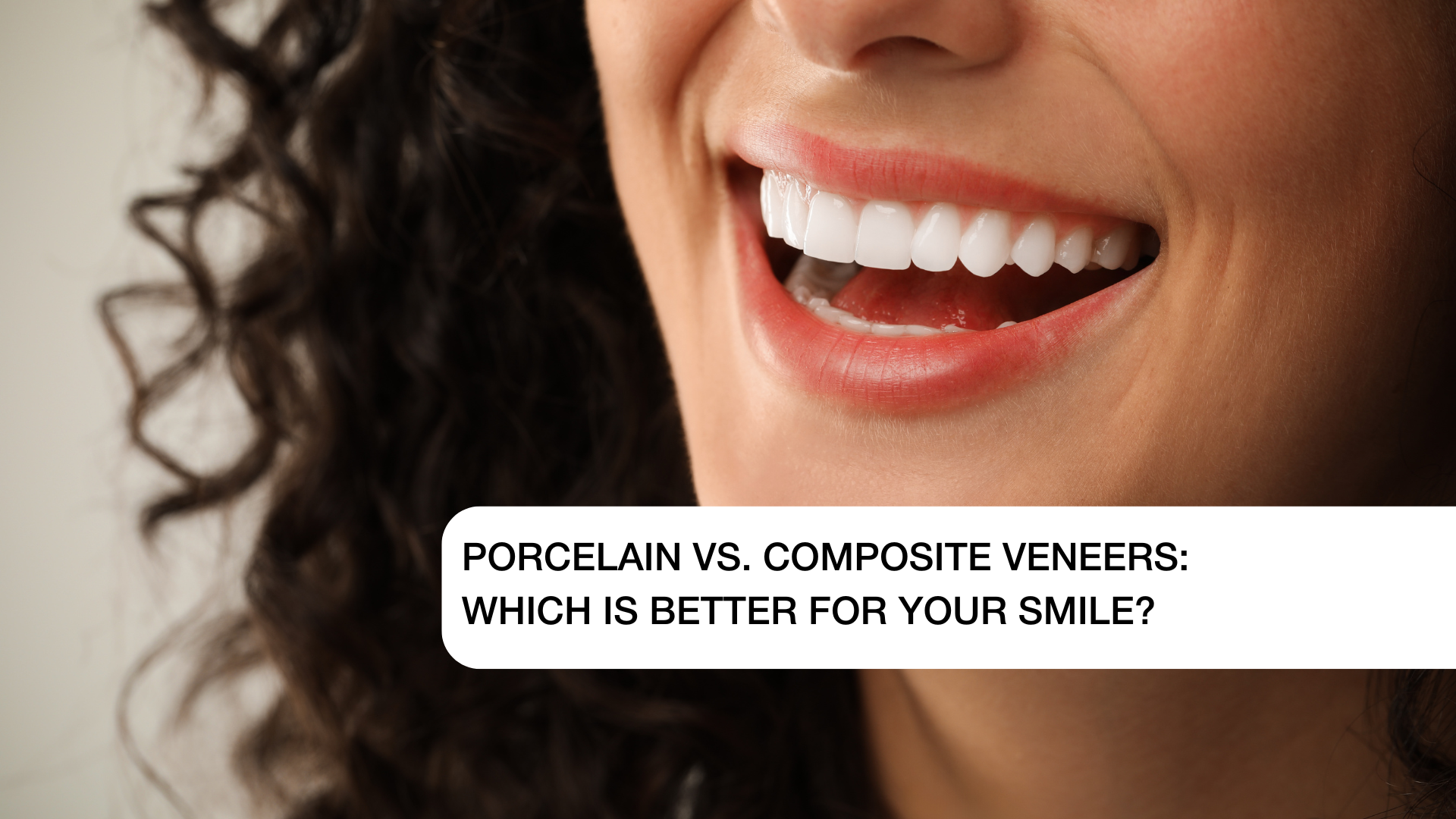
- Compositive veneers
- by admin_cosmetic
If you’ve been thinking about improving your smile, chances are you’ve come across veneers—but with two popular options available, porcelain veneers and composite veneers, how do you know which is right for you?
In this guide, we’ll break down the key differences to help you make the best choice for your smile—and your investment.
What Are Dental Veneers?
Veneers are thin coverings placed over the front of your teeth to correct imperfections like discoloration, gaps, chips, or uneven alignment. They’re one of the most popular cosmetic dentistry solutions for achieving a radiant, natural-looking smile.
There are two main types of veneers:
Porcelain veneers (also known as ceramic veneers)
Composite resin veneers
Porcelain Veneers: The Gold Standard
Porcelain veneers are custom-made, wafer-thin shells of medical-grade ceramic that are bonded to the front of your teeth. They are crafted in a dental lab, using advanced imaging to match your natural smile perfectly.
✅ Pros of Porcelain Veneers:
Highly durable: Last 10–15 years or longer with proper care.
Stain-resistant: They resist coffee, wine, and tobacco stains better than natural enamel.
Natural aesthetics: Mimic the light-reflecting properties of natural teeth for a lifelike result.
Minimal maintenance: Brushing, flossing, and routine dental visits are all you need.
❌ Cons:
Higher cost upfront: They are more expensive than composite.
Longer process: Typically requires 2–3 visits and some enamel removal.
Composite Veneers: The Quick Fix
Composite veneers use a tooth-colored resin that’s applied directly to the teeth and sculpted by your dentist in the office.
✅ Pros of Composite Veneers:
More affordable: Great for budget-conscious patients.
Faster treatment: Often done in a single appointment.
Reversible: Little to no enamel removal is required.
❌ Cons:
Less durable: Last around 4–8 years and may chip more easily.
More prone to staining: Especially from dark beverages or smoking.
Not as natural-looking: Less translucency than porcelain.
Porcelain vs. Composite Veneers: Side-by-Side Comparison
| Feature | Porcelain Veneers | Composite Veneers |
|---|---|---|
| Longevity | 10–15+ years | 1–3 years |
| Stain Resistance | High | Low |
| Aesthetics | Natural, lifelike | Poor aesthetic |
| Treatment Time | 1–3 visits | 1 – 3 visit |
| Cost | Higher | Lower |
| Durability | Stronger | More prone to chips |
Which One Should You Choose?
If you’re looking for a long-term investment, natural beauty, and durability, porcelain veneers are the top choice. They’re ideal for patients seeking a full smile makeover or permanent correction of multiple issues.
On the other hand, if you’re seeking a quick fix, have a limited budget, or only need minor touch-ups, composite veneers may be the right solution.
At Cosmetic Dentistry Center in Brooklyn, our expert team helps patients choose the best treatment based on their goals, lifestyle, and budget.
Real Results From Our Patients
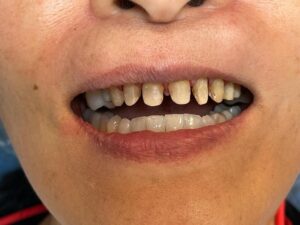
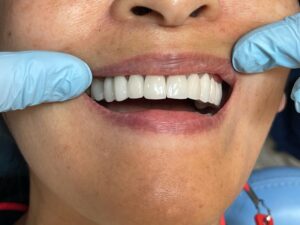
Meet our patient, a Brooklyn native who chose porcelain veneers after years of feeling self-conscious about her smile. After just three visits, she left our office glowing—and hasn’t stopped smiling since.
“I was worried veneers would look fake, but now people just say, ‘Wow, your smile is amazing!’ They don’t even know I had work done.” – our patient.
Book a Veneer Consultation Today
Ready to transform your smile? Our cosmetic dentists are here to help you every step of the way. From digital smile design to final placement, we make the process seamless.
Serving Brooklyn and the greater NYC area
Schedule your consultation today at CosmeticDentistryCenter.com